Zwischen Hörsaal und Klinik:
Fundiertes Wissen, klinische Erfahrung und echte Verantwortung. Alle Informationen zum Studiengang im Überblick

 Online Beratungstermin

Studienprogramm Medizin
Übersicht über Verlauf, Struktur und Inhalt des Studienprogramms

Ihr Studienfahrplan
Strukturierter Aufbau des Medizinstudiums
Das Studienprogramm an der UMFST-UMCH ist in zwei Phasen unterteilt: die vorklinische Ausbildung in den ersten drei Jahren und die klinische Ausbildung in den letzten sechs Semestern. In der vorklinischen Phase erwerben die Studierenden fundierte theoretische Grundlagen in Fächern wie Biologie, Anatomie, Biochemie und Physiologie. Ab dem vierten Studienjahr beginnt die klinische Phase, in der praxisorientierter Unterricht über unser umfangreiches Netzwerk an Lehrpraxen und Lehrkrankenhäuser angeboten wird. Diese Studienstruktur verbindet theoretische und praktische Inhalte eng miteinander, um eine umfassende medizinische Ausbildung zu gewährleisten.
Short Facts zum Studium am UMFST-UMCH

Studienbeginn
Jährlich Ende September

Unterrichtssprache
Englisch im Unterricht
(Deutsch und Spanisch in Lehrkrankenhäusern)

Studiendauer
6 Jahre (12 Semester)

ECTS-Punkte
360 ECTS-Punkte

Zulassungsvoraussetzung
Abitur

Zulassungsverfahren
Online Bewerbung, motivationsbasiertes Interview & Kurzevaluation in Englisch
Verlauf des Studiums
Übersicht über den Verlauf des Studienprogramms
Vorklinischer Studienabschnitt
Studienjahre 1 und 2
Die ersten zwei Studienjahre, die sogenannte vorklinische Phase, bereiten die Studierenden auf den klinischen Abschnitt des Medizinstudiums vor. Der Unterricht erfolgt überwiegend in Form von Vorlesungen, Laborpraktika und Seminaren, wobei der Schwerpunkt auf grundlegenden Fächern liegt, die das wissenschaftliche Fundament für die folgenden Studienjahre legen. Zu den zentralen Inhalten zählen Biochemie, Biophysik, Molekular- und Zellbiologie, Genetik sowie Histologie. Darüber hinaus lernen die Studierenden die anatomischen Strukturen und physiologischen Prozesse des menschlichen Körpers kennen.
Weitere wichtige Themen der vorklinischen Phase sind Medizinsoziologie und -psychologie, Arzt-Patienten-Kommunikation, medizinische Deontologie, Ethik und akademische Integrität sowie medizinische Terminologie. In dieser Phase erhalten die Studierenden erste Einblicke in den ärztlichen Beruf und erwerben die notwendigen medizinischen und naturwissenschaftlichen Kenntnisse für den klinischen Teil des Studiums. Im Gegensatz zu deutschen staatlichen Universitäten endet die vorklinische Phase an der UMFST-UMCH nicht mit einem Physikum.
Bereits ab den ersten Studienjahren können die Studierenden aus einer Vielzahl von Wahlfächern wählen, um ihr Wissen in bestimmten medizinischen Fachgebieten zu vertiefen. Ein mehrwöchiges Pflegepraktikum im Sommer vermittelt erste Einblicke in den Krankenhausalltag und fördert den direkten Patientenkontakt. Die Module werden durch Multiple-Choice-Prüfungen und praktische Prüfungen abgeschlossen, mit denen sowohl das theoretische als auch das praktische Wissen der Studierenden bewertet wird. Während der Sommerzeit bieten zweiwöchige Module, wie beispielsweise Kurse in Anatomie oder Pathologie, zusätzliche praxisnahe Erfahrungen.

Klinischer Studienabschnitt
Studienjahre 3 bis 6
Der klinische Studienabschnitt an der UMFST-UMCH umfasst das dritte bis sechste Studienjahr und widmet sich der Diagnostik, Therapie und Prävention von Erkrankungen des menschlichen Körpers. In dieser Phase erwerben die Studierenden zunächst fundierte theoretische Kenntnisse der klinischen Medizin in modular aufgebauten Lehrblöcken von sechs bis zehn Wochen Dauer. Diese Inhalte werden anschließend im Rahmen klinischer Praktika an den Lehrkrankenhäusern der UMFST-UMCH vertieft, in denen die Studierenden in Kleingruppen von bis zu zehn Personen praxisnah ausgebildet werden. Dabei erlernen sie die direkte Patientenversorgung und erhalten strukturierte Einblicke in verschiedene medizinische Fachdisziplinen.
Zu den zentralen Lehrfächern zählen unter anderem Pathologie, Immunologie, Pharmakologie, Kardiologie, Gastroenterologie, Allgemein- und Viszeralchirurgie, Orthopädie, Pädiatrie, Neurologie, Augenheilkunde, Hals-Nasen-Ohren-Heilkunde, Gynäkologie, Urologie und Onkologie. Ergänzend werden interdisziplinäre Inhalte wie Notfallmedizin sowie Grundlagen bildgebender Verfahren, darunter Computertomographie, Sonographie und Röntgendiagnostik, vermittelt.
Darüber hinaus haben die Studierenden die Möglichkeit, aus einem breiten Angebot an Wahlfächern zu wählen, um ihre Kenntnisse in spezifischen medizinischen Bereichen zu vertiefen und zusätzliche praktische Fertigkeiten zu erwerben. Der erfolgreiche Abschluss der einzelnen Module erfolgt jeweils durch Multiple-Choice-Prüfungen sowie praktische Leistungsnachweise zur Überprüfung der theoretischen und klinischen Kompetenzen. In den Sommermonaten bieten zweiwöchige Intensivmodule, beispielsweise in Anatomie oder Pathologie, eine vertiefte praktische Ausbildung.
Das klinische Medizinstudium wird mit einer Abschlussprüfung abgeschlossen, die aus einer schriftlichen staatlichen Abschlussprüfung sowie der Anfertigung einer wissenschaftlichen Abschlussarbeit besteht.
Struktur des Studiums
Ein klarer Aufbau für Ihren Erfolg im Medizinstudium



Inhalt des Studiums
Übersicht über den Inhalt des Studienprogramms
Das Medizinstudium am UMFST-UMCH umfasst sechs Studienjahre, in denen die Studierenden von den medizinischen Grundlagen über spezialisierte Fächer wie Pharmakologie und Chirurgie bis hin zu Infektionskrankheiten und Forensischer Medizin eine umfassende Ausbildung erhalten, die sowohl theoretisches Wissen als auch praktische Anwendung im klinischen Kontext abdeckt.

1. Studienjahr
Das erste Studienjahr dient der Einführung in die medizinischen Grundlagen. Es vermittelt Elementarwissen des menschlichen Körpers mit den Schwerpunkten Anatomie, Physiologie, Zell-und Molekularbiologie sowie Biochemie. Studierende lernen, vorklinisches Wissen im Kontext klinischer Fragestellungen anzuwenden.
1. Studienjahr
Auszug aus den vorklinischen Fächern des 1. Studienjahres:
- Anatomie
- Physiologie
- Biochemie
- Biophysik
- Medizinische Informatik
- Medizinische Biostatistik

2. Studienjahr
Im zweiten Studienjahr befassen sich die Studierenden unter anderem mit Genetik und Histologie, behandeln aber darüber hinaus auch Themengebiete wie Erste Hilfe oder Arzt-Patienten-Kommunikation. Das zweite Jahr ist das Orientierungsjahr für die klinische Phase ab dem 3. Studienjahr. In diesem Jahr findet die Lehrkrankenhauswahl und der erste Austausch mit Ihrem zukünftigen Lehrkrankenhaus statt.
2. Studienjahr
Auszug aus den vorklinischen Fächern des 2. Studienjahres:
- Physiologie
- Arzt-Patienten-Kommunikation
- Genetik
- Erste Hilfe
- Histologie
- Einführung in die praktische Arbeit

3. Studienjahr
Das dritte Studienjahr stellt eine Kombination aus anspruchsvolleren grundlegenden Fächern dar, die auf dem Campus unterrichtet werden (Pathologie, Pathophysiologie, Pharmakologie), sowie den ersten klinischen Lehrinhalten, die in den Partnerkrankenhäusern der UMFST-UMCH stattfinden (medizinische und chirurgische Semiotik). Ab diesem Studienjahr nehmen die Studierenden zusätzlich zu den campusbasierten Lehrveranstaltungen an einer praktischen Ausbildungsphase an ihrem jeweiligen Lehrkrankenhaus teil. Vor dem Einsatz im Lehrkrankenhaus werden die Studierenden auf dem Campus durch simulationsgestützte Lehrveranstaltungen gezielt auf die klinischen Kernfächer vorbereitet, um einen strukturierten und sicheren Übergang in die klinische Ausbildung zu gewährleisten.
3. Studienjahr
Neben den klinischen Fächern werden im 3. Studienjahr unter anderem folgende Fächer gelehrt:
- Phatologie
- Pharmakologie
- Pathophysiologie
- Bakteriologie
- Hygiene
- Wissenschaftliches Arbeiten

4. Studienjahr
Im 4. Studienjahr wird es besonders praxisorientiert: Hier durchlaufen die Studierenden innerhalb der klinischen Phase erstmalig spezifisch die klinischen Fachbereiche. Diese Fachbereiche werden theoretisch mit praktischen Übungen und Fällen auf dem Campus vermittelt, um dann in der klinischen Phase das erlernte Wissen praktisch im Lehrkrankenhaus umzusetzen. Die Fachbereiche beinhalten sowohl chirurgische als auch internistische Fachbereiche. In allen Studienjahren gibt es die Möglichkeit, durch Wahlpflichtkurse inhaltliche Schwerpunkte zu setzen.
4. Studienjahr
Im 4. Jahr beinhalten die Fächer unter anderem:
- Orthopädie und Unfallchirugie
- Kardiologie
- Notfallmedizin
- Radiologie
- Allgemeinchirurgie
- Arbeitsmedizin

5. Studienjahr
Das Kursspektrum des 5. Studienjahres umfasst ebenfalls gleichermaßen theoretische als auch praktische Aspekte auf dem Campus und im Lehrkrankenhaus. Schwerpunkte sind hierbei die Gastroenterologie, Pädiatrie, Neurologie sowie die Anästhesie und Intensivmedizin. Dabei erhalten die Studierenden nicht nur Einblicke in dem Lehrkrankenhaus, sondern auch im Bereich der Praxisversorgung.
5. Studienjahr
Neben den genannten Fächern beinhaltet das 5. Studienjahr unter anderem:
- Dermatologie
- Rheumatologie
- Nephrologie
- Augenheilkunde
- Onkologie
- Pneumologie

6. Studienjahr
Im letzten Studienjahr vor dem Abschluss arbeiten die Studierenden an einem wissenschaftlichen Forschungsprojekt in Form eines Abstracts und befassen sich mit Themen wie Primärversorgung, Gesundheitsmanagement, Epidemiologie und Public Health. Dieses abschließende Studienjahr dient zugleich der gezielten Vorbereitung auf die abschließenden Abschlussprüfungen.
6. Studienjahr
Weitere theoretische und praktische Fächer im letzten Jahr sind unter anderem:
- Gynäkologie
- Allgemeinmedizin mit Familienmedizin
- Psychiatrie
- Infektionserkrankungen
Das UMFST-UMCH Curriculum
Ganzheitliche Medizin im vorklinischen und klinischen Bereich
Ein umfassendes Medizinstudium
Das Curriculum des Medizinstudiums am UMFST-UMCH bietet eine grundlegende Ausbildung in allen wichtigen medizinischen Disziplinen. Über 12 Semester hinweg werden die Studierenden sowohl in vorklinischen als auch in klinischen Fächern unterrichtet, wodurch Theorie und Praxis optimal miteinander verbunden werden.
Im Download erhalten Sie einen Überblick zum organisatorischen und inhaltlichen Ablauf des Studiums sowie zu den Pflicht- und Wahlpflichtfächern.


Vielfältige Wahlpflichtfächer
Passen Sie Ihr Studium mit vielfältigen Wahlpflichtfächern individuell an
Die optimale Ergänzung
Das Curriculum umfasst neben den Pflichtfächern auch zahlreiche Wahlpflichtfächer, die das Fächerangebot optimal ergänzen. Dadurch können Studierende frühzeitig Schwerpunkte setzen und Grundlagen für die spätere Spezialisierung legen. Pro Jahr muss mindestens ein Wahlpflichtfach belegt werden, mehrere Kurse sind jedoch möglich.

Einblicke in die Wirbelsäulenchirurgie

Medicine of Sexuality
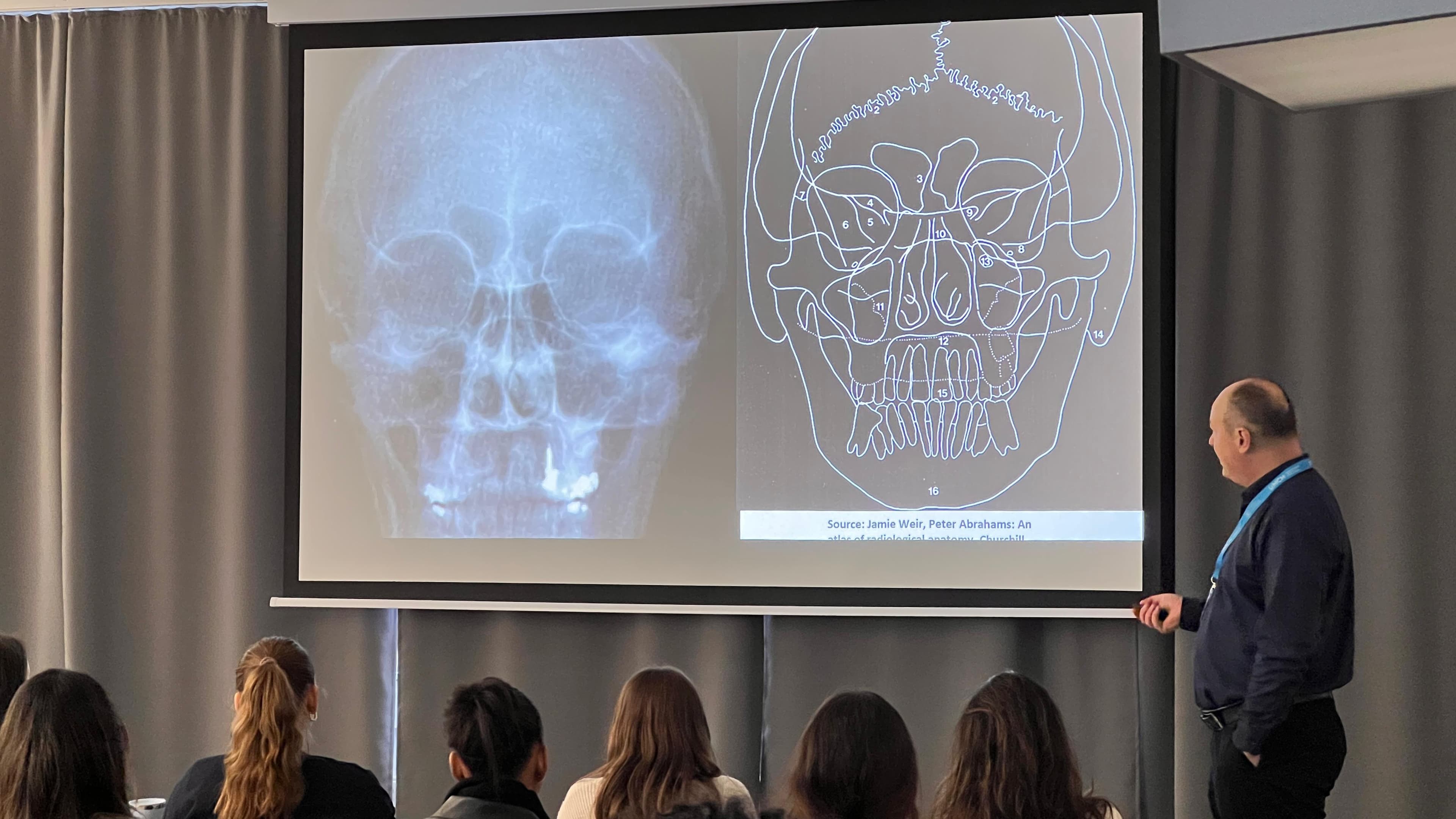
Klinische Anatomie

Katastrophenmedizin-Training

Osteoligamentales Trauma
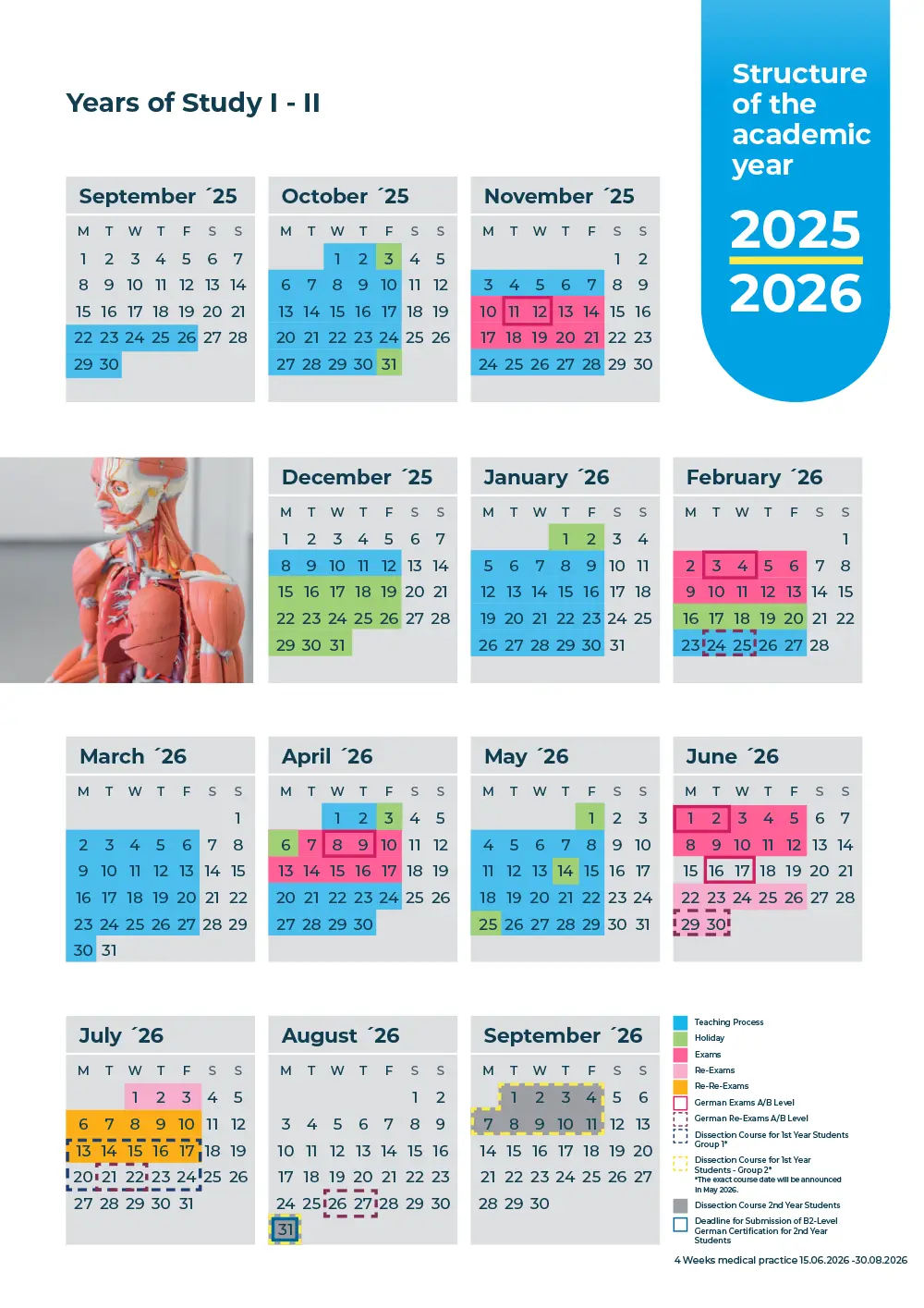
Das akademische Jahr 2025/2026
Ihr Weg zum erfolgreichen Medizinstudium
Das akademische Jahr am UMFST-UMCH beinhaltet eine Kombination aus theoretischen Lehrveranstaltungen und praktischen Ausbildungsphasen, die durch Prüfungen und Sommermodule ergänzt werden. Ab dem dritten Studienjahr wird die theoretische Ausbildung regelmäßig durch Klinikpraktika in denLehrkrankenhäusern ergänzt.


Sie haben Fragen zum Medizinstudium am UMFST-UMCH?
Die Antworten auf die häufigsten Fragen haben wir hier für Sie zusammengestellt.
Ausländische Hochschulabschlüsse können in Deutschland in der Regel nur dann anerkannt werden, wenn sie an einer staatlichen oder staatlich anerkannten Institution erworben wurden. Diese Hochschulen werden in der Datenbank anabin (Informationsportal der Kultusministerkonferenz − Zentralstelle für ausländisches Bildungswesen) mit dem Status H+ gekennzeichnet. Die Institutionen dieses Typs sind im jeweiligen Herkunftsland in der Regel auch als Hochschulen anerkannt (akkreditiert, attestiert u.a.) und ausgehend davon in Deutschland als Hochschulen anzusehen. Die UMFST ist im der anabin Datenbank mit der höchsten Stufe, dem Status H+ gekennzeichnet und erfüllt daher diese hohen Anforderungen.
Mit dem sechsjährigen Medizinstudium am UMFST-UMCH wird ein universitärer Hochschulabschluss in Medizin erworben, der der in Anhang V der EU-Berufsanerkennungsrichtlinie aufgeführten Berufsqualifikation entspricht und in der EU und vielen weiteren Ländern die Grundlage zur Erlangung der Approbation bildet.
Außerdem ist die UMFST gemeinsam mit dem UMFST-UMCH in Hamburg im World Directory of Medical Schools (WDOMS) gelistet (FAIMER-Schul-ID: F0000226). Damit wird den Absolventen der UMCH-UMFST ermöglicht, das amerikanische Staatsexamen (USMLE – United States Medical Licensing Examination) zur Erlangung der ärztlichen Lizenz in den USA abzulegen.
Das in Hamburg angebotene Studienprogramm der UMFST wendet das Europäische System zur Übertragung und Akkumulierung von Studienleistungen (ECTS) an, welches eine europaweite Vergleichbarkeit der Studienleistungen gewährleistet. Im Rahmen des sechsjährigen Studiums werden insgesamt 360 ECTS-Punkte erworben. Jedes akademische Studienjahr beinhaltet 60 ECTS-Punkte.
Wenn Sie keinen Studienplatz an einer staatlichen Universität erhältst, gibt es alternative Wege:
· Studium an einer privaten Universität
· Medizinstudium im Ausland
· Bewerbung an internationalen Programmen
Die UMFST-UMCH bietet dir eine dieser Alternativen: Ein Medizinstudium ohne NC, ohne Wartezeit in Deutschland, kombiniert mit internationaler Ausrichtung und englischsprachigem Studium.
Ja. Das Medizinstudium an der UMFST-UMCH wird vollständig auf Englisch angeboten.
Das ist besonders vorteilhaft für:
· internationale Studierende
· Studierende mit globalem Karrierefokus
· alle, die in der internationalen Medizin arbeiten möchten
Der UMFST-UMCH ist eine Niederlassung der staatlichen UMFST Neumarkt a. M., die in Hamburg den Studiengang Medizin NC-frei und in englischer Sprache anbietet. Die Vorteile eines englischsprachigen Medizinstudiums für die berufliche Zukunft liegen auf der Hand: Durch die Anwendung Ihrer Englischkenntnisse im Studium vertiefen Sie diese und stellen frühzeitig die Weichen für eine erfolgreiche Karriere, nicht nur im internationalen Kontext. Die englische Sprache dominiert in Wissenschaft und Forschung und dient der internationalen Verständigung. Gleichzeitig erweitern Sie Ihren sprachlich-kulturellen Horizont, indem Sie in einem internationalen Umfeld studieren. Knüpfen Sie bereits im Studium Kontakt zu anderen Studierenden, die ebenfalls gerne einen Blick über den eigenen Tellerrand werfen. Die theoretischen Lehrveranstaltungen finden zudem auf einem modern ausgestatteten und verwalteten Campusgebäude in Hamburg-Bahrenfeld statt. In kleinen Gruppen werden Sie intensiv bis zum erfolgreichen Abschluss von motivierten Lehrkräften begleitet. Die Lehre am Krankenbett ab dem 3. Studienjahr erfolgt in den UMFST-UMCH-Lehrkrankenhäusern.
Nein. Als Studierender des UMCH ist man an der Universität für Medizin, Pharmazie, Naturwissenschaften und Technik Neumarkt a. M. eingeschrieben. Hierbei handelt es sich um eine der führenden medizinischen staatlichen Fakultäten Rumäniens. Der UMCH ist eine Niederlassung der UMFST Neumarkt a. M.
Das genaue Datum, an dem das Wintersemester beginnt, wird jedes Jahr neu festgelegt. Es handelt sich allerdings stets um ein Datum im Zeitraum zwischen Ende September und Mitte Oktober. Das entsprechende Datum für das jeweilige Wintersemester wird stets rechtzeitig – sobald es feststeht – bekannt gegeben und online veröffentlicht.
Sowohl Winter- als auch Sommersemester am UMFST-UMCH dauern stets 14 Wochen.
Am UMCH findet der Unterricht auf Englisch statt. Der Unterricht am Krankenbett (der praktisch-klinische Anteil in den Jahren 3 bis 6) an den deutschen Partnerkrankenhäusern bzw. -kliniken erfolgt auf Deutsch.
Ein Englischzertifikat ist für die Bewerbung nicht zwingend erforderlich, aber Ihre Englischkenntnisse werden während des Auswahlgesprächs getestet. Das Medizinstudium in englischer Sprache ist für deutsche Abiturientinnen und Abiturienten in der Regel gut zu bewältigen. Zudem wird im ersten Studienjahr der Kurs Medizinische Terminologie unterrichtet, der die Studierenden mit der medizinischen Fachsprache auf Englisch vertraut macht.
Um an der klinischen Ausbildung in Deutschland (Jahre 3 bis 6) teilzunehmen, müssen internationale Studierende bis zum Ende des zweiten Studienjahres in der deutschen Sprache ein Sprachniveau von B2 vorweisen.
Die ersten drei Studienjahre beinhalten drei Module von jeweils zwei Wochen, die in Neumarkt a. M. absolviert werden. Hierbei handelt es sich um die folgenden Fächer:
1. Studienjahr: Anatomie 1 und 2 (Labor der Anatomieabteilung)
2. Studienjahr: Anatomie 3 (Labor der Anatomieabteilung) und Einführung in das medizinische Arbeiten (Simulationszentrum)
3. Studienjahr: Bakteriologie/Virologie/Parasitologie (Labor der Mikrobiologischen Abteilung) und Morphopathologie (Labor der Pathologischen Abteilung)
Für die Lehre am Krankenbett ab dem 3. Studienjahr kooperiert die Universität mit einer Vielzahl von Partnerkrankenhäusern und -kliniken in ganz Deutschland. Natürlich werden bei der konkreten Zuweisung an ein Partnerkrankenhaus bzw. eine -klinik die persönlichen Präferenzen des jeweiligen Studierenden berücksichtigt. Eine diesbezügliche, verbindliche Abfrage erfolgt zu Beginn des 2. Studienjahres. Sollten sich mehr Studierende für ein bestimmtes Partnerkrankenhaus bzw. eine -klinik bewerben, als Plätze zur Verfügung stehen, werden diese strikt nach Leistung vergeben (Ranking gemäß dem Notendurchschnitt des ersten Studienjahres, bei Gleichstand Losverfahren).
Sie beenden Ihr Studium am UMFST-UMCH mit einem universitätsinternen Abschlussexamen statt dem Staatsexamen. Somit werden Sie im Hinblick auf das Abschlussexamen optimal und maßgeschneidert unterrichtet. Hinzu kommen die Anfertigung und Präsentation einer schriftlichen wissenschaftlichen Abschlussarbeit unter Betreuung einer Dozentin oder eines Dozenten welches Bestandteil des Abschlussexamens ist.
Nach Abschluss Ihres Studiums am UMFST-UMCH haben Sie die Möglichkeit, an der UMFST Doctoral School den Titel „Dr.“ beziehungsweise „PhD“ zu erwerben. Das Programm steht allen Absolventinnen und Absolventen medizinischer Studiengänge aus Deutschland, Rumänien und dem Ausland offen und richtet sich insbesondere an diejenigen, die über den erfolgreichen Studienabschluss hinaus während ihrer Zeit als Assistenzärztin beziehungsweise Assistenzarzt die Befähigung zu vertiefter wissenschaftlicher Arbeit erlangen wollen.
Das PhD-Programm ist ein wissenschaftliches Forschungsdoktorat und der „PhD“-Grad der bekannteste Doktorgrad im englischsprachigen Raum. Damit ist das von der UMFST Doctoral School angebotene Doktorat ein vollumfänglicher und international anerkannter Abschluss aus dem sogenannten dritten Zyklus des Bologna-Systems.
Ziel des Programms ist es, Ihnen durch methodisch, fachlich und akademisch umfassende Schulung den Weg in die Welt der medizinischen Forschung zu eröffnen und somit eine wissenschaftliche Karriere zu ermöglichen. Während des Programms beschäftigen Sie sich mit einem anspruchsvollen Forschungsprojekt und nehmen an einer Reihe ausgewählter Begleitveranstaltungen teil. Das gesamte Programm kann von Deutschland aus wahrgenommen werden. Die Trägerin beziehungsweise der der Träger ist dazu bereichtigt, den Doktortitel sowohl in Deutschland als auch in allen anderen EU-Mitgliedsstaaten als „Dr.“ (ohne Zusatz und/oder Herkunftsbezeichnung) beziehungsweise „PhD“ zu führen. Zudem ist eine Eintragung in den Personalausweis möglich.
Alternativ können Sie sich auch auf eine Doktorandenstelle an einer staatlichen Universität in Deutschland bewerben und auf diesem Weg den deutschen Doktorgrad erwerben.
Ja, ein Wechsel an den UMFST-UMCH in das 2., 3., 4. oder 5. Studienjahr ist für das akademische Jahr 2026/27 möglich. Gerne informieren wir Sie vorab über eine mögliche Anrechnung der bisher absolvierten Fächer und erlangten ECTS-Punkte. Bitte kontaktieren Sie das UMFST-UMCH-Team, um zu erfahren, welche Informationen hierzu benötigt werden.
Ja. An der UMFST-UMCH kannst du Medizin ohne Numerus Clausus (NC) studieren. Der Zugang zum Medizinstudium ist nicht an einen bestimmten Abiturschnitt gebunden.
Ein Medizinstudium ohne NC bietet dir die Möglichkeit, deinen Traum vom Arztberuf zu verwirklichen – unabhängig von deinem Abiturschnitt.
Viele staatliche Universitäten vergeben Studienplätze ausschließlich nach Noten. An der UMFST-UMCH stehen dagegen Motivation, persönliche Eignung und Interesse an der Medizin im Mittelpunkt.
Ja. An der UMFST-UMCH hast du die Möglichkeit, Medizin auch mit einem niedrigeren Abiturschnitt zu studieren.
Da kein Numerus Clausus angewendet wird, stehen deine Motivation, deine Persönlichkeit und dein Interesse an der Medizin im Vordergrund.
Die Zulassung am UMFST-UMCH erfolgt grundsätzlich unabhängig von den deutschen Numerus clausus-Grenzen. Es ist also keine bestimmte Abiturdurchschnittsnote erforderlich. Es ist auch möglich, sich mit einem nicht deutschen Schulabschluss zu bewerben – vorausgesetzt, der jeweilige Schulabschluss entspricht dem deutschen Abitur (z. B. A-Levels oder International Baccalaureate). Bewerberinnen und Bewerber mit einer anderen Hochschulzugangsberechtigung informieren sich bitte beim UMFST-UMCH-Team.
Mit Ihrer Bewerbung müssen Sie folgende Unterlagen einreichen:
Motivationsschreiben in englischer Sprache (250-300 Wörter), das mindestens zwei der folgenden Fragen beantwortet:
Wer/Was hat Ihre Entscheidung, sich an einer medizinischen Fakultät zu bewerben, beeinflusst?
- Welche Schritte werden Sie gehen, um als Studierender beziehungsweise Ärztin oder Arzt erfolgreich zu sein?
- Welche Pläne und Visionen haben Sie bezüglich Ihrer medizinischen Ausbildung?
- Welche Ihrer außerschulischen Aktivitäten haben Sie am meisten beeinflusst und warum?
- Was ist Ihr Lieblingsbuch und inwiefern hat es Sie beeinflusst?
- Gibt es in Ihrem Leben außergewöhnliche/unübliche Umstände, die uns dazu bewegen würden, Ihre Bewerbung in einem anderen Licht zu sehen?
- Beschreiben Sie die Umgebung, in der Sie bisher gelebt haben, und sagen Sie uns, was Sie daran ändern möchten.
- Welche Veränderungen möchten Sie durch Ihre Arbeit bewirken?
Lebenslauf in englischer Sprache
Hochschulzugangsberechtigung (z. B. Abiturzeugnis, International Baccalaureate oder A-Levels)
- Ihr Schulabschluss muss Ihnen den Zugang zur Hochschulbildung im Herkunftsland ermöglichen.
- Wenn Ihr Schulabschluss in einem Nicht-EU-Land ausgestellt wurde und/oder die Sprache, in welcher der Abschluss ausgestellt wurde, NICHT Englisch, Deutsch oder Rumänisch ist, wenden Sie sich bitte an das UMCH-Team, um die zusätzlichen Bewerbungsanforderungen zu prüfen.
- Wenn Sie sich noch in Ihrem Abschlussjahr befinden und noch kein Abitur haben, füllen Sie bitte dieses Formular aus und reichen es bei uns ein.
Reisepass oder Personalausweis (Ausweis: beidseitig / Reisepass: Seiten 1 – 4)
Zeugnisse der 9. bis 12. (bzw. 13.) Klasse
Nachweis über die Zahlung der Bewerbungsgebühr in Höhe von 595 €
Auch vor Erhalt des Abschlusszeugnisses können (und sollten) Sie Ihre Bewerbung bereits einreichen. Da die Vergabe der Studienplätze am UMFST-UMCH sukzessive erfolgt, ist es von großem Vorteil, wenn Sie sich frühzeitig bewerben. Füllen Sie dazu bitte dieses Formular aus und reichen es bei uns ein.
Prinzipiell ist es möglich, sich mit dem Fachabitur auf einen Platz am UMFST-UMCH zu bewerben. Voraussetzung ist jedoch, dass Sie zusätzlich bereits einen Bachelor-Abschluss haben – unabhängig von Studienfach oder -richtung.
Die Bewerbungsfrist für das kommende akademische Jahr läuft stets bis Ende Juli. Alle Informationen dazu finden Sie hier.
Das Zulassungsverfahren am UMFST-UMCH besteht in erster Linie aus einem motivationsbasierten Interview und einer anschließenden Kurz-Evaluation. Im Interview geht es vor allem um die persönliche Qualifikation und Motivation der Bewerberin beziehungsweise des Bewerbers. Dazu können auch Fragen zu den von Ihnen eingereichten Bewerbungsunterlagen gehören (z. B. Arbeits- oder Praktikumsbescheinigungen für frühere Tätigkeiten im medizinischen Bereich oder ehrenamtliche Tätigkeiten). Die Evaluation besteht aus 75 simplen Multiple-Choice-Fragen zu Biologie, Chemie und Allgemeinwissen. Alle drei Themengebiete werden gleich gewichtet. Die Ergebnisse der Kurz-Evaluation und des Interviews werden in einem Verhältnis von 60:40 in die Gesamtbewertung einbezogen.
Sie können jederzeit und unkompliziert am Zulassungsverfahren teilnehmen. Eine Anreise zu einem unserer Zulassungstermine in Hamburg ist nicht zwingend notwendig. Es besteht die Möglichkeit, online – über Video Call – an der Kurzevaluation und dem motivationsbasierten Interview teilzunehmen.
Eine Zu- oder Absage erhalten Sie innerhalb von 48 Stunden nach Ihrer Teilnahme am Zulassungsverfahren. Durch die zeitnahe Bekanntgabe Ihrer Ergebnisse können Sie die Zeit vor Beginn des Studiums am UMFST-UMCH möglichst effizient nutzen – etwa zur Vorbereitung auf Ihren Schulabschluss, falls Sie sich vor dem Erhalt des Abiturs bewerben, für freiwillige beziehungsweise ehrenamtliche Aktivitäten oder zum Absolvieren von Praktika. Zudem bleibt Ihnen so noch genügend Zeit für eventuelle Reisen oder zur Wohnungssuche.
Wer das Zulassungsverfahren vollständig durchlaufen hat, erhält – je nach Erfolg in der Evaluation und in dem Interview des Zulassungsverfahrens –
- im Rahmen der verfügbaren Kapazität eine Zusage für das unmittelbar bevorstehende Wintersemester oder – sofern die Kapazität an Studienplätzen für das unmittelbar bevorstehende Wintersemester erschöpft ist –
- eine Zusage für das dem unmittelbar bevorstehenden Wintersemester direkt folgende Wintersemester mit dem Angebot, auf die Warteliste für das unmittelbar bevorstehende Wintersemester gesetzt zu werden, oder
- eine Absage.
Die Studiengebühren belaufen sich für Bewerberinnen und Bewerber aus EU-Ländern, EWR-Ländern, dem Vereinigten Königreich und der Schweiz auf 14.900 € pro Semester. Für Bewerberinnen und Bewerber aus allen übrigen Ländern liegen sie bei 17.400 € pro Semester. Dazu kommen eine einmalige Bewerbungsgebühr von 595 € sowie eine ebenfalls einmalige Immatrikulationsgebühr von 4.500 €. Darüber hinaus besteht die Möglichkeit, ab dem 3. Studienjahr den Rest des Studiums am Campus der UMFST in Neumarkt a. M. zu absolvieren. Bei dieser Variante betragen die Studiengebühren für den Zeitraum ab dem 3. Studienjahr 3.000 € pro Semester. Für die ersten beiden Studienjahre gelten bei dieser Variante ebenfalls die oben genannten Konditionen für Bewerbungen aus EU-Ländern, EWR-Ländern, dem Vereinigten Königreich und der Schweiz beziehungsweise Bewerbungen aus allen übrigen Ländern.
Bitte überweisen Sei die Studiengebühren auf das folgende Konto:
CPE Europe GmbH
Hamburger Sparkasse (HASPA)
IBAN: DE92 2005 0550 1503 6472 71
BIC: HASPDEHHXXX
Als Studierender des UMFST-UMCH haben Sie die Möglichkeit, einen zinsgünstigen Studienkredit der Hamburger Sparkasse (Haspa) in Anspruch zu nehmen. Sie können sich zwischen einer Voll- oder Teilfinanzierung entscheiden, wobei Sie individuell wählen können, in welcher Höhe Sie einen Kredit aufnehmen möchten. Bei einer Kreditsumme von bis zu 100.000 € erfolgt ein vereinfachtes Antragsverfahren. Die Voll- bzw. Teilfinanzierung der Studiengebühren bietet Ihnen maximale Flexibilität und ist auf Ihre persönliche Situation abgestimmt. Genauere Informationen dazu finden Sie hier.
Während Ihres Studiums am UMFST-UMCH steht es Ihnen selbstverständlich frei, einen Nebenjob auszuüben.Wir raten unseren Studierenden jedoch aufgrund des hohen Anspruchs und Zeitaufwand des Medizinstudiums, dazu, lediglich an Wochenenden und/oder während der Semesterferien zu arbeiten. Es ist sicherzustellen, dass die Anwesenheitspflicht an den Lehrveranstaltungen durch einen potentiellen Nebenjob nicht verletzt wird und Ihnen stets genügend Zeit für das Selbststudium zur Verfügung steht.
Akkreditierung ist ein Bewertungsprozess für Studiengänge und dient der Qualitätssicherung von Studienabschlüsse. Ein akkreditierter Studiengang ist ein Garant für die Einhaltung von wissenschaftlichen Standards und hohe Akzeptanz des Abschlusses. Auf diesem hohen Qualitätsniveau ist die UMFST und ihre Studiengänge schon seit Jahren legitimiert.
Der englisch-sprachige Humanmedizin-Studiengang ist von der rumänischen Agentur für Qualitätssicherung im Hochschulwesen (ARACIS) akkreditiert. ARACIS ist Vollmitglied der Europäischen Vereinigung für Qualitätssicherung in der Hochschulbildung (ENQA).
Im Jahr 2023 wurde der Studiengang Medizin aus Hamburg von der IAAR (Independent Agency for Accreditation and Rating) akkreditiert. Die IAAR ist von der World Federation for Medical Education (WFME) anerkannt, hat den Status eines Vollmitglieds der European Association for Quality Assurance in Higher Education (ENQA) und ist im European Quality Assurance Register for Higher Education (EQAR) eingetragen. Dies berechtigt die IAAR dazu, internationale Akkreditierungen von medizinischen Organisationen und Programmen durchzuführen. Dementsprechend erhalten alle von der IAAR akkreditierten Bildungseinrichtungen und Programme den Status einer internationalen Akkreditierung. Die Tätigkeit der IAAR entspricht den „Standards und Leitlinien für Qualitätssicherung im Europäischen Hochschulraum (ESG)“, damit gewährleistet die UMFST-UMCH einen Kontinuität bei der Qualität der englisch-sprachigen Humanmedizin-Studienganges .
Neben den medizinischen Fächern gibt es zwei weitere Themen, in denen Unterricht stattfindet:
Sportunterricht
Das Curriculum beinhaltet verpflichtenden Sportunterricht, der in modernen, mit dem UMFST-UMCH kooperierenden und in unmittelbarer Nachbarschaft zum Hamburger Campus gelegenen Sportanlagen stattfindet. Hierzu wurde ein evidenzbasiertes Konzept erarbeitet, nach dem die Studierenden sich aus sportwissenschaftlichem Blickwinkel mit Themen wie Muskelaufbau beschäftigen und somit ein breiteres Verständnis für körperliche Vorgänge entwickeln sollen.
Darüber hinaus bietet der UMFST-UMCH seinen Studierenden auch Vergünstigungen bei einer Mitgliedschaft bei Verein Aktive Freizeit e.V. (VAF). Der VAF befindet sich mit seiner Freizeitsportanlage in unmittelbarer Nachbarschaft des UMCH-Campus. Auf über 3.000 Quadratmetern bietet die multifunktionale Sportanlage ein 25-m-Schwimmbad (28 °C), einen großzügigen Wellnessbereich, drei Gymnastikhallen, einen Spinningraum und das TÜV-zertifizierte „Studio für gesunde Fitness“. Ein umfangreiches Programm an Sportkursen rundet das Angebot ab. Es reicht von Spannung bis Entspannung, von klassisch bis dynamisch.
Der VAF bietet für die Studierenden des UMFST-UMCH Sonderkonditionen zur Nutzung der Freizeitsportanlage. UMFST-UMCH-Studierende müssen keine Anmeldegebühren bezahlen und erhalten auf die Mitgliedsbeiträge und Kursgebühren für Studierende eine 10-prozentige Ermäßigung.
Romanian cultural studies
Dieser Kurs dient vor allem zur Horizonterweiterung der Studierenden. Dadurch lernen sie, ihren Blick auf ein breiteres Themenspektrum zu richten. Durch die umfangreichen Inhalte des Kurses, die von Kultur über Ethik bis hin zu Geschichte reichen, lernen sie neue Blickwinkel kennen, die ihnen im Studium und späteren Berufsleben von großem Nutzen sein werden. Während des Kurses werden zudem die Zusammenhänge zwischen Kultur und Kognition erkundet. Dabei werden verschiedene Arten von interaktiven Unterrichtsmethoden angewendet, um gemeinsam Arbeitstechniken zu erarbeiten, mit deren Hilfe die Studierenden ihre interpretativen und kritischen Kompetenzen verbessern.
In Kooperation mit den Studierendenwohnheimen Uninest, THE FIZZ und Urban Living bietet der UMFST-UMCH Ihnen die Option, während der Studienzeit in Hamburg zu günstigen Konditionen in komplett möblierten Studierendenappartements zu wohnen.
Die Appartements von Uninest befinden sich in der modern ausgestatteten Wohnanlage „Navale“, die insgesamt 328 Studios umfasst. Zu den Vorteilen von Uninest zählen unter anderem eine eigene Küche inklusive Kochfeldern, Mikrowelle und Gefrier-/Kühlkombination in jedem Apartment sowie ein Paketannahme- und Hausmeisterservice.
Der Standort von THE FIZZ befindet sich in Altona-Nord. Neben hochwertiger Möblierung der einzelnen Appartements und kostenlosen Leihartikeln zählen hier auch die Außenanlagen des Gebäudes sowie Community Areas – wie eine Dachterrasse, eine Lobby und eine Movie Lounge – zu den größten Pluspunkten für Ihren persönlichen Wohnkomfort.
Beim Urban Living handelt es sich um einen modernen Gebäudekomplex mit verschiedenen Appartementtypen im Hamburger Stadtteil Ottensen. Die Wohnungen verfügen allesamt über eine eigene Küche und eigenes Bad sowie über einen Balkon oder eine (Dach-)Terrasse. Zudem gibt es in der Wohnanlage unter anderem eine Eventküche, ein Sportfeld und einen Fitnessraum.
Neben Uninest, THE FIZZ und Urban Living zählt auch die Unterkunftsplattform HousingAnywhere zu den Partnern des UMFST-UMCH. Die Plattform zeichnet sich unter anderem durch ihr besonders sicheres Buchungssystem aus. Zudem erhalten Sie als Studierende der Universität VIP-Status, wodurch sich Ihre Chancen, ein Zimmer oder eine Wohnung zu finden, um ein Vielfaches erhöhen.
Hier erfahren Sie mehr über unsere Partner im Bereich Wohnen.
In der UMFST-UMCH-eigenen Mensa – können Studierende täglich zwischen zwei Gerichten wählen, von denen eines stets vegetarisch oder vegan ist. Außerdem gibt es eine vielfältige Auswahl an Sandwiches, Salaten und Getränken. Die Bezahlung erfolgt bargeldlos.